Trees Managed for Decades of Health
Certified Arborist Services in Jacksonville for preservation, health monitoring, and long-term stability
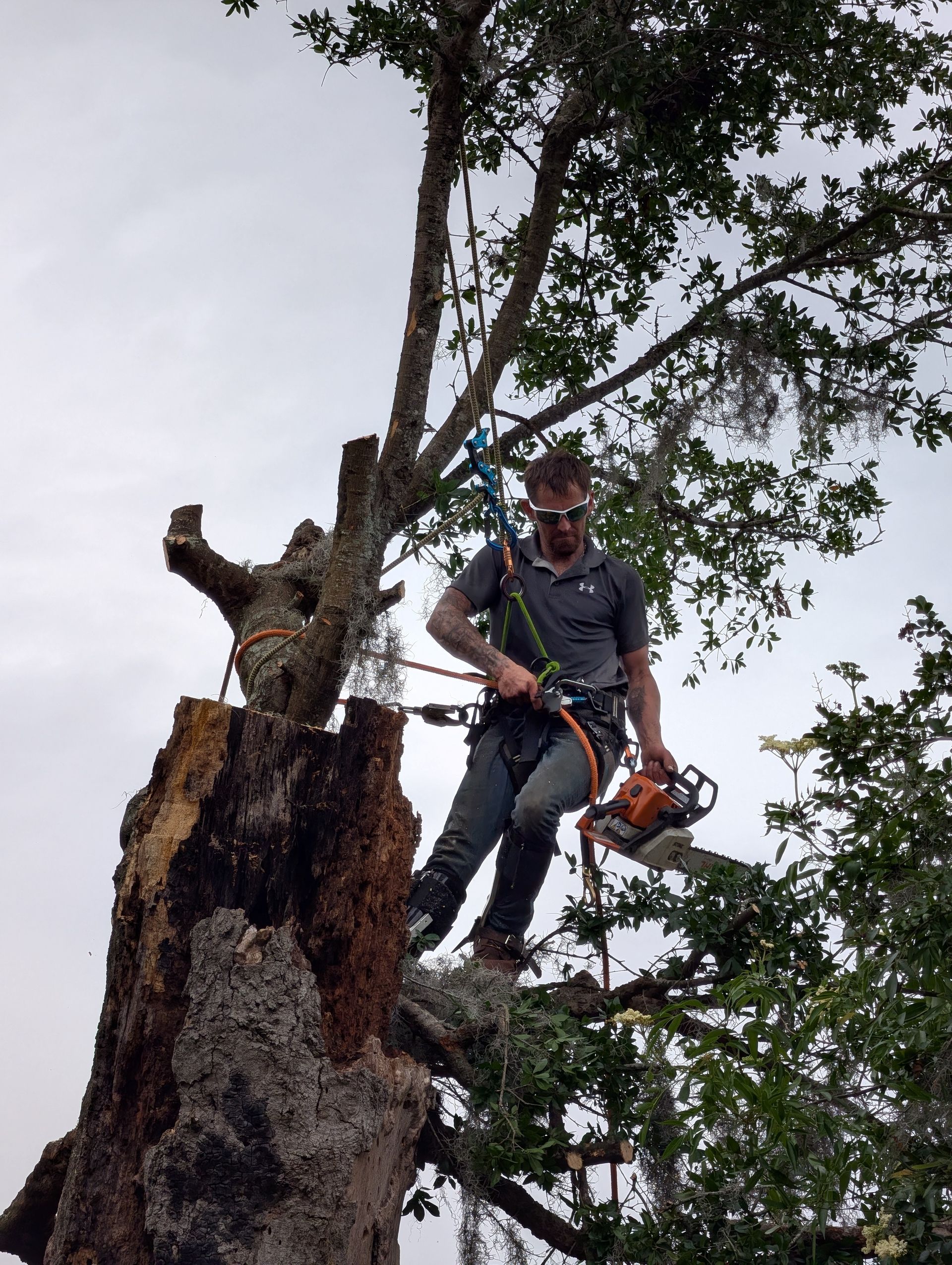
Certified arborists apply science-based tree care that extends beyond basic trimming, focusing instead on soil health, structural pruning, and preventative maintenance strategies that address stress factors before they compromise stability or vigor. A1 All American Tree Service provides arborist consultations across Jacksonville properties where mature oaks, magnolias, and pines represent significant landscape investments requiring expert evaluation rather than generalized cutting. Deep-root fertilization delivers nutrients directly to feeder roots in compacted urban soils where surface applications fail to penetrate, and pruning plans remove weight from overextended limbs while preserving the canopy architecture that defines a tree's form and function.
Arborist services address disease identification, decay inspection, and structural weaknesses that develop as trees age or sustain storm damage, with recommendations tailored to each specimen's species, condition, and site constraints. Evaluations consider storm vulnerability in hurricane-prone Northeast Florida, where wind load calculations help determine which limbs require reduction to prevent failure during severe weather events that routinely exceed sixty-mile-per-hour gusts.
Schedule an arborist consultation to assess tree health and develop a proactive care plan for your property.
Why Science-Based Tree Care Works Long-Term
Arborist evaluations involve inspecting root flare exposure, measuring trunk diameter to calculate wind resistance, and using resistance drills to detect internal decay that weakens structural integrity without visible external symptoms. Certified arborists differentiate between cosmetic issues like minor leaf discoloration and systemic problems such as root girdling or vascular disease that threaten tree survival, then recommend interventions proportional to the severity and progression rate of identified conditions.
Properties managed with arborist guidance maintain healthier canopies with fewer dead branches, experience reduced storm damage due to structural pruning that balances weight distribution, and retain mature trees that would otherwise decline from untreated pest infestations or soil deficiencies. Trees show improved growth rates following deep-root fertilization, and pruning plans executed over multiple seasons gradually correct structural defects that developed during early growth without removing excessive canopy mass in a single session.
Preventative maintenance strategies include seasonal monitoring for pest activity, soil testing to identify nutrient imbalances, and cabling or bracing systems that support co-dominant stems prone to splitting under wind load. Arborist recommendations sometimes conclude that removal is safer and more cost-effective than attempting to preserve severely compromised trees, particularly when decay has hollowed structural wood beyond the point where pruning or fertilization can restore stability.
Common Questions About This Service
Property owners often ask how arborist consultations differ from standard tree services and what specific problems certified evaluation identifies that general trimming does not address.
What does a certified arborist evaluate during a property assessment?
Arborists inspect root systems for girdling or decay, evaluate trunk and scaffold limb structure for weak attachments, assess canopy density for disease or pest damage, and test soil conditions that affect nutrient availability and root health.
How is arborist pruning different from regular tree trimming?
Arborist pruning follows ANSI A300 standards that specify where cuts are made relative to branch collars, how much canopy can be removed without stressing the tree, and which limbs to prioritize based on structural mechanics rather than aesthetic preferences alone.
When should I request an arborist evaluation in Jacksonville?
Request evaluations for mature trees showing unexplained decline, properties purchased with large specimen trees of unknown health, or before major landscape projects that could impact root zones through construction activity or grade changes.
Can arborist care save a tree that looks like it's dying?
Success depends on the cause and extent of decline—trees stressed by temporary drought or nutrient deficiency often recover with intervention, while trees with advanced root rot or vascular disease may be too compromised to save regardless of treatment intensity.
What credentials should I look for in a tree arborist?
Certified arborists hold credentials from the International Society of Arboriculture requiring examination and continuing education, and many also carry Tree Risk Assessment Qualifications that demonstrate advanced training in hazard evaluation.
A1 All American Tree Service employs certified arborists trained in species-specific care for trees common to Northeast Florida landscapes, including live oaks susceptible to root fungus and slash pines vulnerable to bark beetles. Contact our team to arrange a property assessment and receive a written evaluation with care recommendations based on current tree conditions.