Eliminating Hazards Before They Fall
Tree Limb & Branch Removal in Jacksonville for cracked, storm-damaged, or overhanging branches threatening vehicles and rooflines
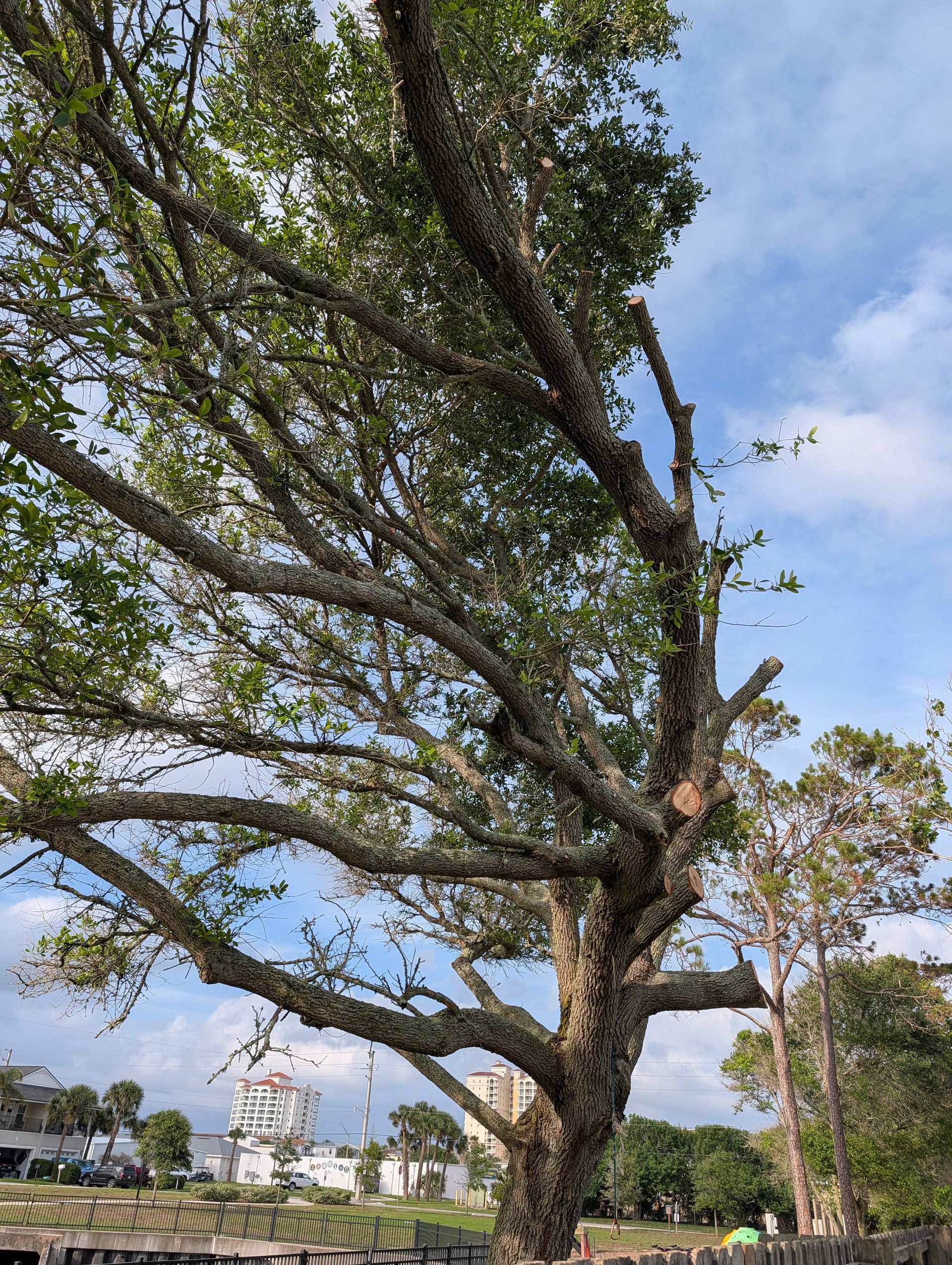
Hurricane season and summer thunderstorms crack limbs that remain suspended in canopies, hanging over driveways where they'll eventually fall on parked cars or block garage access. Targeted branch removal addresses specific hazards without committing to full tree trimming, handling limbs that developed cracks after wind events, grew too close to power lines, or extended over patios where falling debris threatens outdoor furniture and family gatherings. A1 All American Tree Service removes dangerous and overgrown limbs across Jacksonville, working on residential properties where precision cutting protects surrounding landscaping and structures from collateral damage. Once the hazard branch is down, you'll see clear access restored, the debris hauled away, and the remaining tree still intact and functional.
Branch removal involves rigging the limb before cutting to control its descent, particularly for sections hanging over structures or positioned where a free fall would crush shrubs or damage fencing. The crew cuts from the underside first to prevent bark tearing, then completes the cut from above, lowering the branch with ropes to a staging area where it's sectioned for hauling. Fast-response services address fallen limbs resting on roofs or vehicles, removing weight before it causes additional structural damage or punctures through shingles into attic spaces.
Schedule a hazard inspection to identify branches showing crack development or problematic overhang before the next weather event.
Why Precision Cutting Matters for Branch Work
Precision techniques prevent the collateral damage that occurs when heavy branches swing into adjacent structures during uncontrolled falls, using directional cuts and rigging angles that guide descent paths away from obstacles. Cuts are positioned to avoid tearing bark down the trunk, which creates entry points for decay and insect activity that compromise tree health long after the branch is removed. Local storm preparation needs and hurricane season risk reduction make proactive removal important for limbs showing stress cracks, hollow sections, or lean angles that indicate failure is developing even when the branch still holds foliage.
After removal finishes, you'll notice the branch gone, the drop zone cleared of wood debris, and the tree's remaining structure undisturbed by the work. Cleanup and debris hauling included with every project means broken limbs don't sit stacked in the yard waiting for disposal, and you're not left managing a pile of wood too large for curbside pickup. The difference becomes clear when storms pass through and the previously hazardous branch isn't there to break loose and damage property or injure someone walking beneath the tree.
The service handles branches overhanging roofs, driveways, and utility lines but doesn't include full canopy trimming unless additional work is requested after the hazard is addressed. Emergency branch removal responds to limbs that fell during storms and require immediate clearing to restore access or prevent further damage. Pricing reflects the complexity of rigging required and the size of the branch being removed, with simple ground-level work costing less than technical removals over structures requiring ropes and precision lowering.
Questions Before Starting Your Project
Branch removal projects raise questions about timing, safety protocols, and what qualifies as an emergency response situation in Northeast Florida.
What makes a branch hazardous enough to warrant removal?
Visible cracks extending through the limb, hollow sections producing sawdust at the base, severe lean toward structures, or contact with power lines all indicate failure risk that justifies removal before the branch falls unpredictably.
How are branches hanging over roofs removed without causing damage?
Rigging involves tying the branch securely before cutting, then lowering it with controlled tension to prevent it from dropping freely or swinging back into the roof edge during descent.
When should storm-damaged branches be removed in Jacksonville?
Limbs cracked but still attached should be removed promptly after storms, as weakened structure fails faster under subsequent wind load or additional weight from rain-soaked foliage.
What cleanup happens after branch removal projects?
Debris hauling includes cutting removed branches into transportable sections, loading all wood and foliage, and clearing the work area of sawdust and bark fragments before the crew departs.
Does removing one branch require permits or utility coordination?
Residential branch removal typically doesn't require permits unless the tree is protected by local ordinance, though work near power lines may require utility notification to ensure safe clearance distances during cutting.
A1 All American Tree Service provides emergency branch removal when limbs fail unexpectedly and threaten property or safety. Contact the company directly to report hazards requiring urgent attention or to schedule evaluations for branches showing signs of stress before they become immediate risks.