Keeping Palms Safe and Storm-Ready
Palm Tree Trimming & Removal in Jacksonville for properties with overgrown fronds, storm-damaged crowns, or hazardous leaning trunks
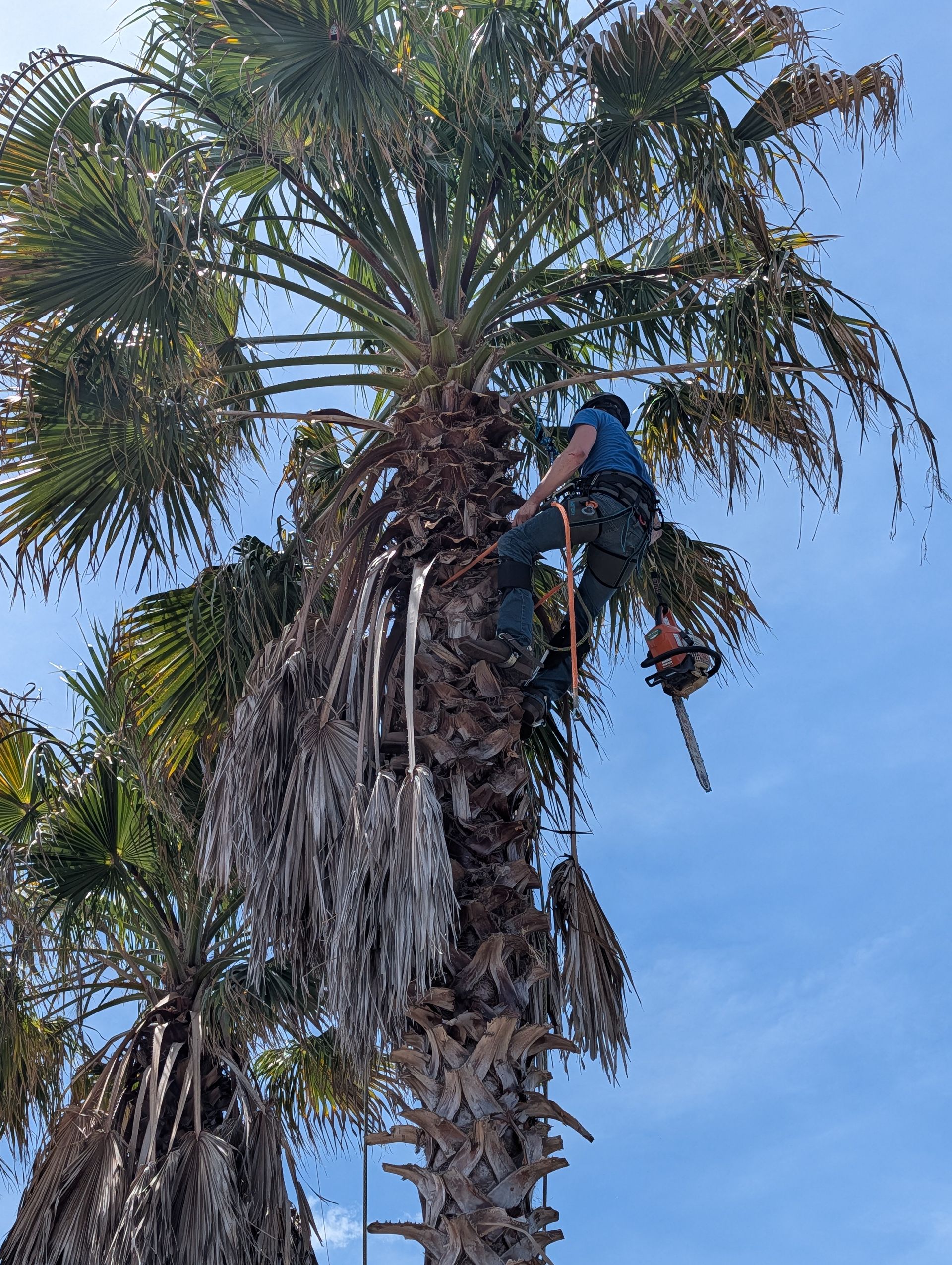
A1 All American Tree Service handles palm tree trimming and removal across Jacksonville, addressing overgrown fronds that create fire hazards and weakened trunks that threaten structures during high winds. Palm maintenance differs fundamentally from hardwood tree care because improper cuts to the growing crown kill the entire tree, and frond removal timing affects the tree's ability to withstand hurricane-force winds. Jacksonville's coastal storm patterns mean palms need seasonal assessment before hurricane season begins and immediate attention after storm damage occurs.
Palm trimming removes dead or dying fronds that hang below the horizontal plane while leaving enough green fronds to protect the crown and maintain photosynthesis. Removal becomes necessary when root systems destabilize from soil erosion, fungal infections spread through the trunk, or the palm's location endangers buildings and power lines. Most Jacksonville properties see frond accumulation accelerate during the humid summer months when growth rates peak.
Schedule a property assessment to evaluate palm health and identify storm risks before hurricane season begins.
What Proper Palm Care Prevents Long-Term
Palm trimming focuses on removing only the fronds that have turned completely brown or pose immediate hazard, because cutting green fronds reduces the tree's structural stability and disease resistance. Each palm species tolerates different pruning intensities—queen palms require minimal removal while Canary Island date palms handle more aggressive thinning. The cut must leave at least two inches of petiole attached to the trunk to prevent entry points for palm weevils and fungal pathogens that thrive in Jacksonville's humidity.
After trimming, you'll notice improved sight lines around the property, elimination of falling frond hazards near walkways and vehicles, and reduced weight load on the crown that decreases wind resistance during storms. Removal work clears the entire root ball and fills the cavity to prevent sinkholes, leaving the area ready for replanting or hardscaping. Properties with multiple palms see better airflow between trees, which reduces fungal spread and improves overall landscape health.
Palm removal sometimes requires coordinated cuts when trees lean toward structures or power lines, and disposal involves sectioning the trunk into manageable pieces since palm wood doesn't chip like hardwoods. Trimming schedules depend on species growth rates and storm exposure—waterfront properties typically need twice-yearly service while inland palms often require only annual maintenance.
Questions Before Starting Your Project
Palm maintenance in Jacksonville requires understanding species-specific needs and coastal storm preparation, so these answers address common concerns about timing, safety, and what to expect during service.
What determines if a palm needs removal instead of trimming?
Trunk stability matters most—if the trunk shows horizontal cracks, soft spots when pressed, or leans more than fifteen degrees from vertical, removal prevents collapse during the next storm event that hits Jacksonville.
How does trimming affect a palm's wind resistance?
Removing dead fronds reduces sail area that catches wind, but cutting too many green fronds eliminates the natural shock absorption system that allows the crown to flex without snapping during sustained winds above sixty miles per hour.
When should palms be trimmed before hurricane season?
Schedule trimming between late March and early May, after the winter dormancy period ends but before the June storm season begins, giving the tree time to seal cuts and adjust crown weight.
What happens to the wood after palm removal?
Palm trunks contain too much moisture and fiber for standard chipping equipment, so they're typically sectioned and hauled for specialized composting rather than processed on-site like hardwood debris.
How do you remove a palm near a building foundation?
Sectional dismantling from the crown downward prevents large pieces from falling toward structures, and root extraction stops within two feet of foundation lines to avoid undermining concrete footings common in Jacksonville construction.
A1 All American Tree Service evaluates palm condition and proximity hazards during on-site consultations, providing detailed removal plans for compromised trees. Request an inspection to determine whether your palms need trimming, removal, or storm preparation before severe weather arrives.