Shaping Trees for Health and Safety
Tree Trimming & Pruning in Jacksonville for properties maintaining storm resistance and clearance over structures
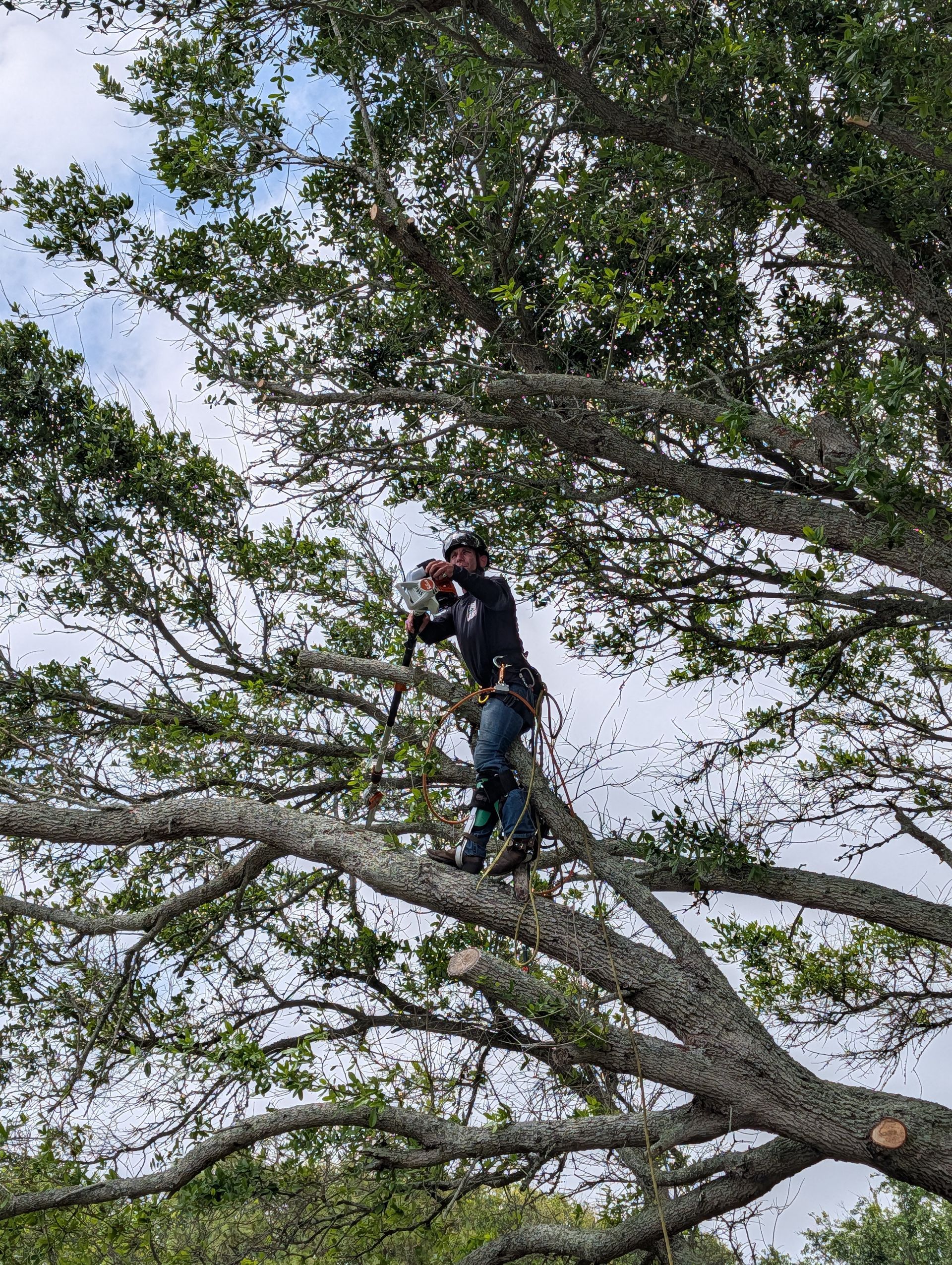
Overgrown canopies scrape roofs during wind events, deadwood breaks and falls unpredictably, and branches extending over driveways block delivery trucks and emergency vehicles. Proper trimming removes hazards, improves tree health by eliminating diseased wood, and restores clearance over sidewalks and outdoor living spaces where low limbs interfere with use. A1 All American Tree Service provides tree trimming and pruning across Jacksonville, working with mature shade trees and ornamental species common in the area to address aesthetic shaping, crown raising, and deadwooding. After trimming completes, you'll notice branches cleared from roof lines, improved canopy light penetration, and debris hauled off-site rather than left stacked at the curb.
Trimming involves selective cuts that remove specific branches rather than indiscriminate shearing that stresses the tree and produces weak regrowth. Crown raising eliminates lower limbs to create clearance beneath the canopy, deadwooding removes brittle branches likely to fail during storms, and thinning reduces wind resistance by opening the canopy without altering the tree's natural shape. Florida weather conditions—frequent thunderstorms, occasional hurricanes, and high humidity that accelerates decay—make preventative pruning important for reducing failure risk before storm season intensifies.
Request a property inspection to evaluate which trees require trimming and what cuts improve both appearance and storm resistance.
What Proper Trimming Accomplishes
Trimming improves tree health by removing crossing branches that rub and create wounds, diseased limbs that spread pathogens through the canopy, and dead wood that harbors insects while contributing no photosynthetic value. Cuts are made just outside the branch collar—the swollen area where the limb joins the trunk—allowing the tree to compartmentalize the wound and seal it naturally without leaving stubs that rot and invite decay. You avoid the long-term damage that results from flush cuts or tears that strip bark and expose sapwood to fungal infection.
Once pruning finishes, you'll notice improved air circulation through the canopy, reduced weight on limbs extending over structures, and a cleaner appearance as the tree's natural form becomes visible again. Debris hauling and complete cleanup automatically included with every project means the yard isn't left covered with branches waiting for municipal pickup or multiple trips to the landfill. The difference shows up during the next storm when properly pruned trees shed wind load rather than splitting or uprooting.
Trimming services address branches threatening structures but don't include root pruning, cabling, or bracing for trees with structural defects requiring mechanical support. Seasonal maintenance scheduling allows pruning during dormant periods for species that benefit from reduced sap flow, though hazard removal proceeds regardless of season when branches threaten immediate damage. The service handles trees over roofs, sidewalks, driveways, and patios where clearance matters for safety and access.
What Property Owners Usually Ask
Trimming decisions involve timing, cut selection, and maintenance frequency based on tree species and growth rates common throughout Northeast Florida.
What's the difference between trimming and pruning in practice?
Trimming generally refers to shaping and clearance cuts for aesthetic or safety purposes, while pruning focuses on selective removal that improves tree health, though the terms are often used interchangeably in residential tree care.
How often should mature shade trees be trimmed in Jacksonville?
Most mature trees benefit from inspection every 2 to 3 years, with trimming scheduled when deadwood accumulates, clearance diminishes, or storm damage creates new hazards rather than on a fixed calendar interval.
When is the best time to schedule trimming for storm preparation?
Late winter through early spring allows removal of weak branches before hurricane season begins in June, giving cuts time to seal and reducing failure risk during peak storm months from August through October.
What happens to branches trimmed from over roofs and driveways?
Debris hauling includes cutting branches into manageable sections, loading them into trucks, and transporting all wood and foliage off-site, leaving the property cleared and ready for normal use immediately after the crew departs.
Does trimming prevent trees from growing back over structures?
Trimming provides temporary clearance, but trees continue growing and eventually require repeat maintenance, with faster-growing species like laurel oaks needing more frequent attention than slower-growing pines or magnolias.
A1 All American Tree Service schedules seasonal maintenance that aligns trimming with optimal timing for tree health and storm preparation. Arrange an evaluation to identify which trees need attention and what cuts will address both safety concerns and long-term canopy development.