
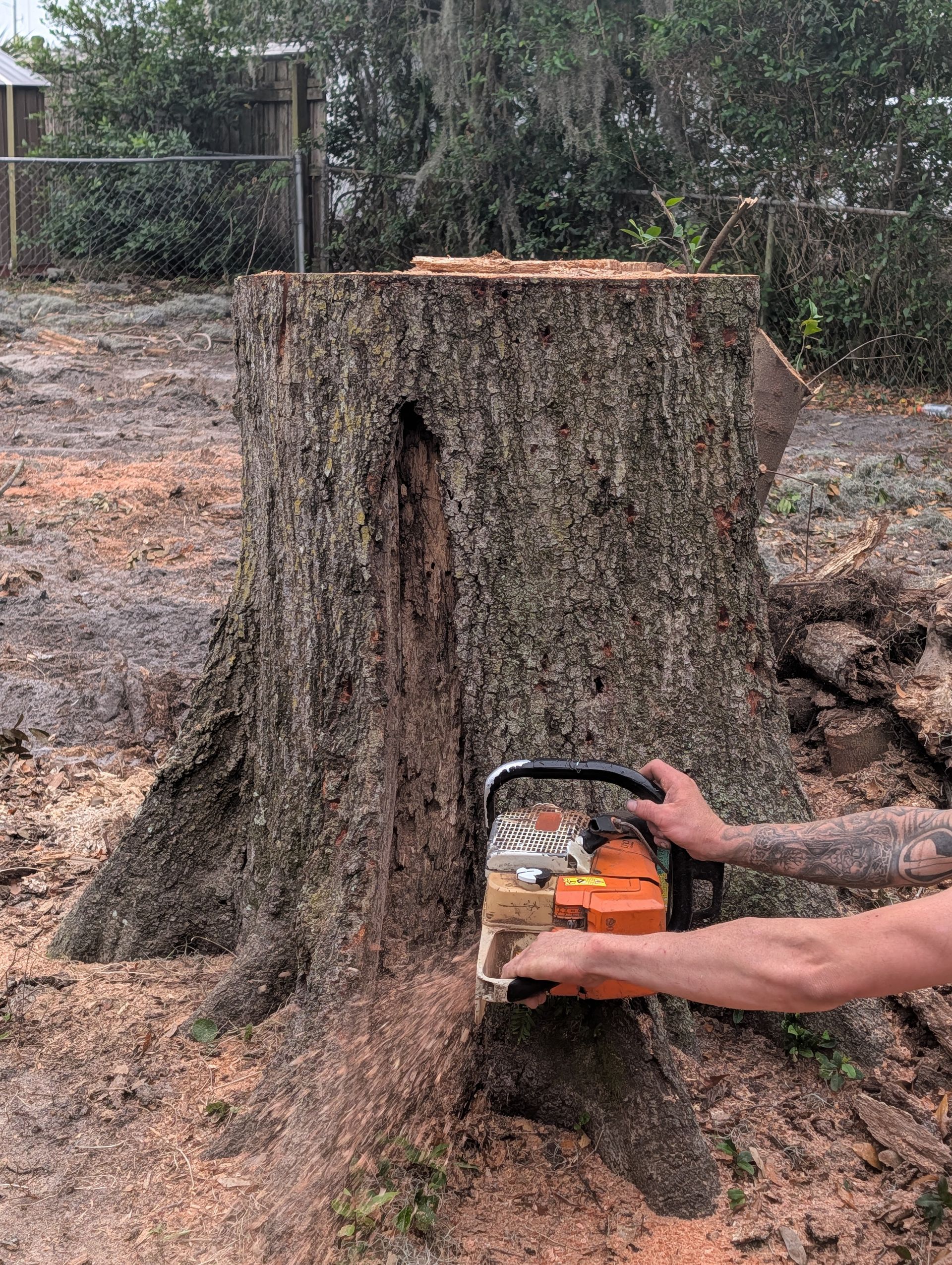
Restoring Yard Space After Tree Removal
Stump Grinding & Removal in Jacksonville for properties reclaiming usable space after storm-damaged or cleared lots
Stumps occupy prime yard space, create tripping hazards on walking paths, and attract termites that eventually migrate toward structures with wood siding or framing. Mechanical grinding reduces stumps below ground level, eliminating the obstacle and allowing grass or landscaping to cover the area without waiting years for natural decay. A1 All American Tree Service provides stump grinding services across Jacksonville that restore usable yard space and improve curb appeal, working on recently cleared lots or long-neglected stumps that homeowners finally address during property upgrades. After grinding finishes, you'll see wood chips filling the depression, the root flare gone, and the area ready for soil amendment and replanting.
Stump grinding involves a rotating cutting wheel that chips away wood incrementally, working below the surface to remove the visible stump and the top portion of the root structure. The grinder moves across the stump in passes, lowering with each cycle until the wood sits 6 to 12 inches below grade depending on what you're planning for that space. For properties where cost matters more than immediate results, affordable chemical root-killing treatments offer a lower-cost alternative that accelerates decay over months rather than removing the stump in a single visit.
Schedule a stump evaluation to determine grinding depth requirements based on your landscaping or construction plans.
What Changes After Grinding Completes
Grinding eliminates the visible stump and reduces the root structure enough that mowing and landscaping proceed without obstruction, though some lateral roots remain beyond the grinding radius and decay naturally underground over time. The process generates wood chips that partially fill the resulting depression, which settles as the remaining roots decompose and voids collapse beneath the surface. Properties planning sod installation or garden beds benefit from deeper grinding that removes more root mass and reduces settling issues later.
After the grinder departs, you'll notice the stump depression filled with fresh chips, the surrounding lawn cleared of debris, and the tripping hazard eliminated from pathways and play areas. Cleanup services included with grinding leave lawns ready for landscaping or replanting, hauling excess chips off-site unless you prefer them left as mulch for garden areas. The difference becomes obvious when you can mow straight across the former stump location without raising the deck or damaging blades on hidden wood.
Grinding addresses the stump itself but doesn't remove every root segment extending through the yard, particularly lateral roots running toward driveways or foundations. If pest activity was already present in the stump, grinding removes the food source and eliminates the harborage that attracts insects. Chemical treatments work slower but avoid grinding noise and equipment access concerns for stumps in tight spaces or near underground utilities where wheel contact risks damage.
Answers to Frequent Service Questions
Stump grinding decisions involve depth requirements, debris handling, and timing considerations that vary based on property conditions across Northeast Florida.
What depth does grinding typically reach below ground level?
Standard grinding removes stumps 6 to 12 inches below grade, sufficient for lawn restoration, though deeper grinding to 18 inches accommodates construction or planting projects requiring root-free soil.
How do chemical treatments compare to mechanical grinding for removal?
Chemicals accelerate decay over 6 to 12 months by breaking down lignin in the wood, avoiding equipment mobilization costs but delaying final removal until the stump softens enough for manual extraction.
When should stumps be ground after tree removal in Jacksonville?
Grinding can occur immediately after removal or years later, though fresh stumps grind faster than aged wood hardened by prolonged drying, reducing machine time and project cost.
What happens to the wood chips generated during grinding?
Chips fill the stump depression and can be spread as mulch, left on-site for decomposition, or hauled away if you're preparing the area for sod or hardscaping that requires clean soil.
Does grinding prevent root spread and future sprouting?
Grinding removes the energy-storage structure that fuels new growth, though some species like sweetgum or oak may send up shoots from lateral roots until those segments exhaust their reserves.
A1 All American Tree Service provides post-removal cleanup scheduling that coordinates grinding with landscaping timelines, ensuring stumps don't delay property improvements. Contact the company to arrange stump evaluations that assess grinding requirements based on tree species, root spread, and your plans for the cleared area.