Storm Damage Response When Trees Fail
Emergency Services in Jacksonville for properties with fallen trees blocking access, limbs on structures, or hazardous leaning trunks after severe weather
Hurricanes, tropical storms, and severe thunderstorms cause immediate tree failures that block driveways, damage roofs, and threaten power lines until professional removal crews arrive with equipment to safely dismantle and extract fallen timber. Emergency tree work addresses dangerous situations where waiting for normal scheduling puts property and people at risk—trees leaning against homes under tension, root balls lifted from saturated soil, and canopies suspended in overhead utility lines all require immediate response regardless of time or weather conditions. A1 All American Tree Service operates emergency response services throughout Jacksonville, mobilizing crews within hours of storm events and during ongoing severe weather when trees continue failing.
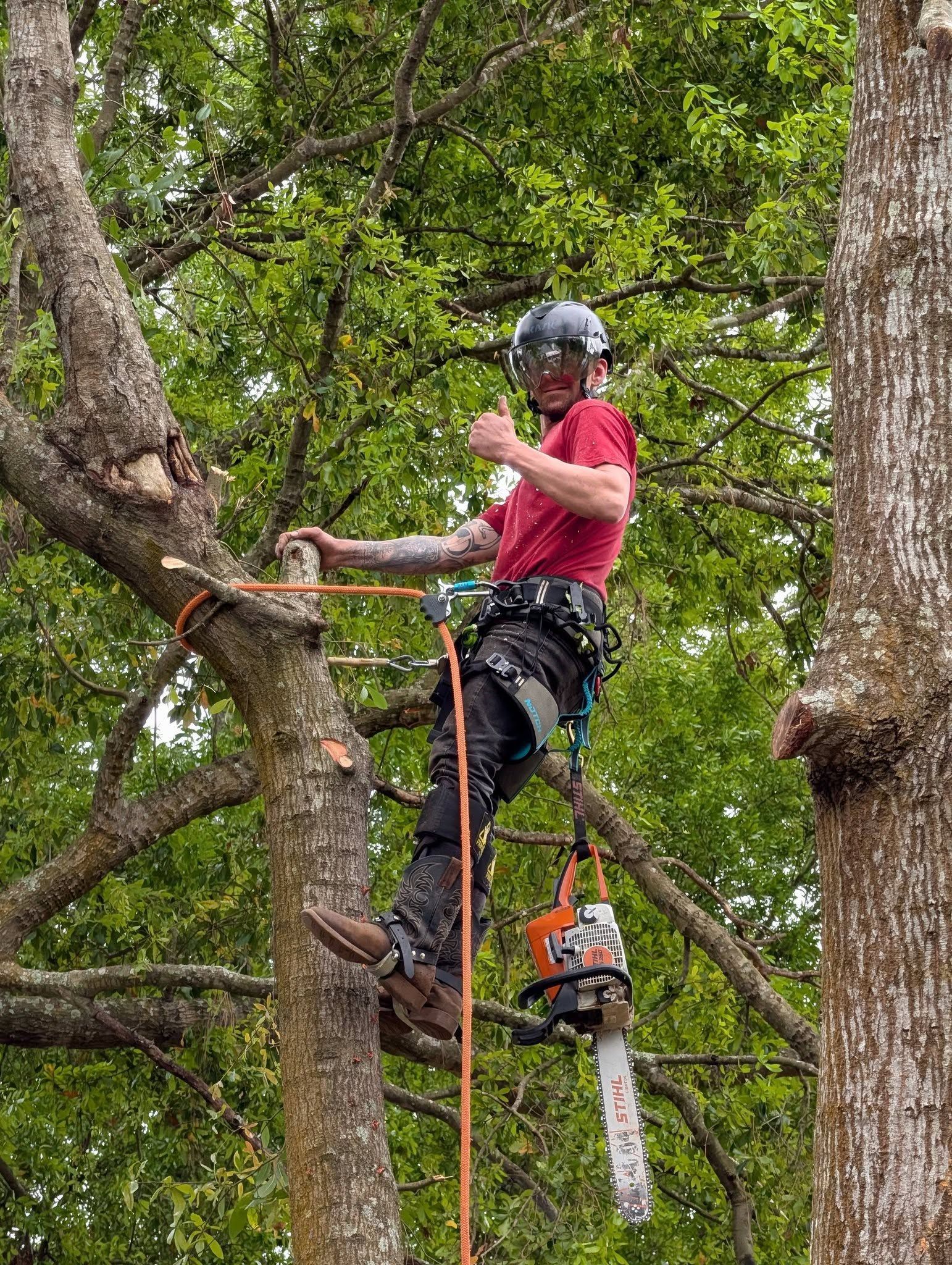
Storm damage creates hazardous conditions that untrained property owners cannot safely address—chainsaw work near power lines risks electrocution, partially fallen trees store tremendous tension that releases unpredictably when cut, and weakened trunks collapse without warning during removal attempts. Emergency crews bring specialized rigging equipment, aerial lifts rated for storm-damaged tree access, and experience reading tree failure patterns to prevent secondary collapses during extraction.
Call for immediate dispatch when trees fall on structures, block essential access routes, or create life-safety hazards on your property.
What Happens During Emergency Tree Response
Emergency response prioritizes life safety and property protection over aesthetic concerns—the goal is stabilizing or removing the immediate hazard, not precision trimming or stump grinding. Crews assess structural integrity of damaged trees before cutting, establish safety perimeters to keep people away from collapse zones, and coordinate with utility companies when power lines are involved. Jacksonville's frequent lightning strikes during summer storms often leave trees structurally compromised even when still standing, requiring emergency evaluation to determine if immediate removal prevents delayed collapse.
Once emergency work finishes, you'll have blocked access routes cleared for vehicles and emergency services, trees removed from roof surfaces before additional structural damage occurs, and hazardous leaning trunks eliminated before they fall unpredictably during the next wind event. Properties that experienced partial tree failures will have remaining portions stabilized or removed based on structural assessment, preventing secondary failures during cleanup operations. Debris gets moved to allow property access, with full removal and stump grinding scheduled after the immediate emergency resolves.
Emergency service pricing differs from standard work because response happens outside normal hours, often during active weather events when conditions are dangerous and access is limited. Insurance documentation includes detailed photos of damage, timestamps proving rapid response, and itemized billing that separates emergency stabilization from follow-up cleanup work.
Answers to Frequent Service Questions
Emergency situations create urgent questions about response time, safety, and what happens next, so these answers address immediate concerns for Jacksonville property owners dealing with storm-damaged trees.
How quickly can emergency crews arrive?
Response time depends on storm severity and crew availability—during active hurricanes when conditions are too dangerous for safe operations, crews mobilize as soon as sustained winds drop below tropical storm force, typically arriving within two to four hours of your call once conditions allow safe work.
What if a tree fell on power lines?
Never approach trees in contact with power lines, even if lines appear dead—call your utility provider first to de-energize the lines, then emergency tree crews can safely remove the tree once electrical hazards are eliminated.
Does emergency service include complete cleanup?
Initial response focuses on hazard removal and access restoration, leaving debris on-site until the immediate emergency resolves, then full cleanup including stump grinding and debris hauling gets scheduled as follow-up work once conditions stabilize.
How do you handle trees leaning against houses?
Leaning trees often store significant tension between the trunk and contact point—crews use rigging systems and controlled cuts to relieve tension gradually, preventing sudden releases that could worsen structural damage to Jacksonville homes built with standard wood-frame construction.
Will insurance cover emergency tree removal?
Most homeowner policies cover tree removal when storm damage causes trees to fall on insured structures, but coverage limits and documentation requirements vary by policy, so photograph damage before removal begins and request itemized invoices for insurance claims.
A1 All American Tree Service maintains equipment and crews ready for emergency deployment across Jacksonville when severe weather strikes. For immediate assistance with fallen or hazardous trees threatening your property, call our emergency line to dispatch crews as conditions allow safe response.