Ground Preparation for Construction and Development
Land Clearing in Jacksonville for properties requiring vegetation removal, grade preparation, or site development before construction begins
Overgrown lots with dense underbrush, invasive species, and mature trees prevent construction access and site evaluation until all vegetation is removed and the ground is graded to specifications. A1 All American Tree Service provides land clearing across Jacksonville for residential developments, commercial projects, and agricultural conversions that require complete vegetation removal down to bare soil. Florida's year-round growing season means that cleared sites without immediate development will see rapid regrowth of Brazilian pepper, Chinese tallow, and other invasive species within sixty days if root systems aren't fully extracted.
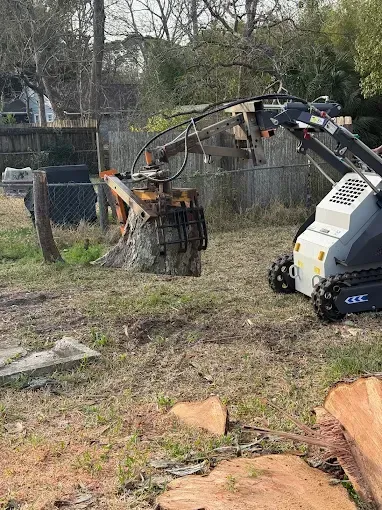
The clearing process starts with tree removal and stump grinding, then progresses to underbrush elimination and root extraction, finishing with debris hauling and rough grading that leaves the site ready for survey work and foundation planning. Jacksonville's high water table and sandy soil conditions require different equipment approaches than clay-based regions—tracked machinery distributes weight to prevent rutting, and wet season clearing often demands silt fencing to control runoff.
Request a site evaluation to determine vegetation density, access requirements, and timeline for clearing your property.
How Land Clearing Addresses Site Development Needs
Clearing work removes all standing timber, grinds stumps below grade level, and pulls invasive root systems that would otherwise penetrate future foundations and utility lines. Equipment selection depends on lot size and soil conditions—smaller residential lots under one acre use compact machinery to minimize ground disturbance, while multi-acre commercial sites require larger dozers and excavators for efficient vegetation removal. The process includes separating usable timber from brush waste, allowing property owners to salvage valuable hardwood for milling or firewood.
Once clearing finishes, you'll see defined property boundaries, unobstructed access for construction vehicles and survey equipment, and elimination of fire hazards from accumulated deadfall and dry underbrush. The cleared ground reveals actual topography and drainage patterns that weren't visible under vegetation cover, helping identify low spots that need fill dirt before construction begins. Sites with mature tree removal will have stump grindings spread or hauled away, leaving a relatively level surface ready for grading equipment.
Full clearing includes debris removal from the site, but some projects specify on-site chipping and mulch spreading for erosion control in areas not scheduled for immediate construction. Permit requirements vary by property size and zoning—clearing over one acre in Jacksonville typically requires erosion control plans and wetland delineation before work begins.
Common Questions About This Service
Site preparation involves multiple steps and equipment decisions, so property owners in Jacksonville often ask about timing, costs, and what the clearing process includes.
What's the difference between land clearing and selective tree removal?
Clearing removes all vegetation down to bare ground for development purposes, while selective removal preserves desirable trees and only eliminates specific hazards or unwanted growth.
How long does clearing take for a typical residential lot?
A quarter-acre lot with moderate tree density and accessible terrain usually requires one to two days for complete clearing, grinding, and debris removal, though wet ground conditions during Jacksonville's summer rainy season can extend timelines.
What happens to the wood after palm removal?
Gopher tortoises and certain tree species require relocation permits before clearing begins—surveys identify protected flora and fauna so appropriate permits can be secured before equipment mobilizes.
Can clearing work happen during wet season?
Yes, but tracked equipment becomes necessary to prevent soil compaction and rutting when water tables rise, and silt fencing must be installed before any vegetation removal begins to control sediment runoff.
What's included in debris removal?
All cut vegetation, stump grindings, and root balls are loaded and hauled from the site unless you specify on-site chipping for mulch or request timber salvage for personal use.
A1 All American Tree Service coordinates with surveyors and builders to ensure clearing meets construction specifications and site access needs. Arrange a consultation to review your development timeline and clearing requirements based on current site conditions.